
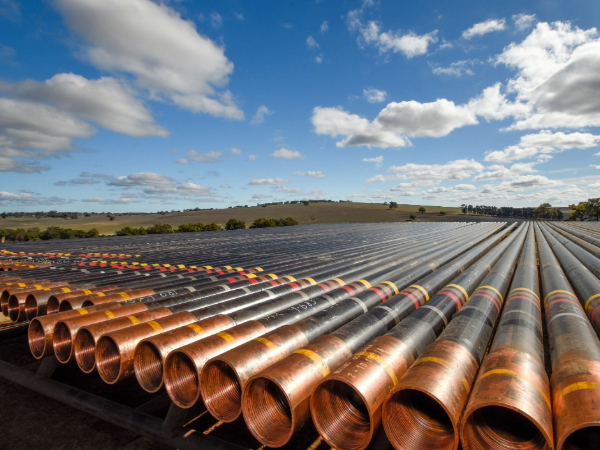
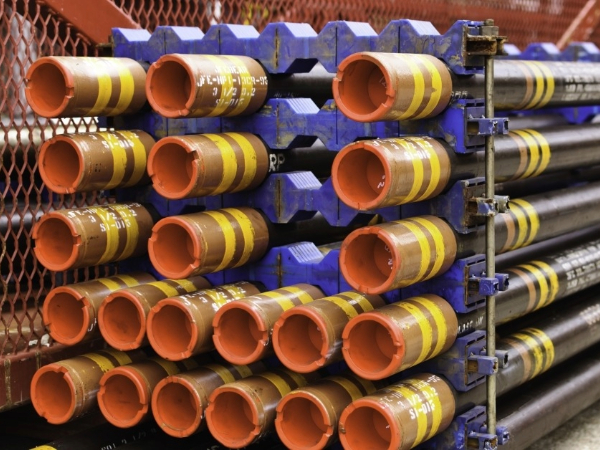
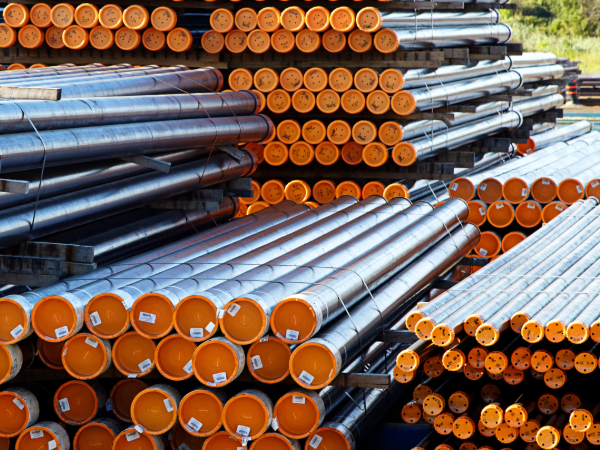
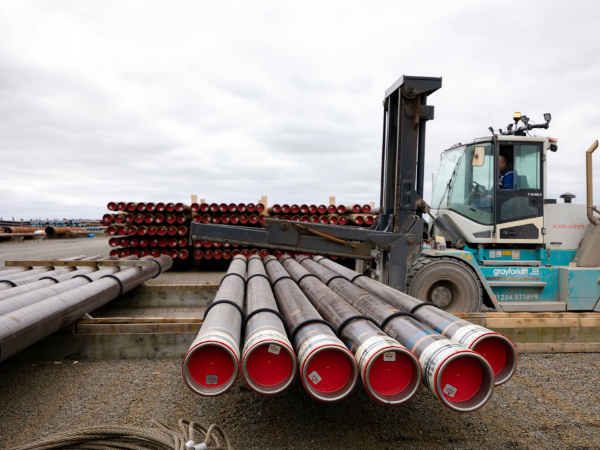
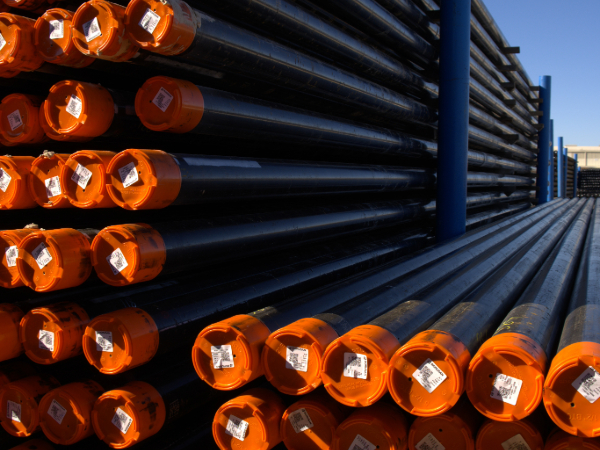
| Product: | Casing Pipe, Oil Casing, API Casing, Well Casing, Casing |
| Application: | Used for oil casing and tubing in oil wells as well as sidewall |
| Size: | OD: 114.3mm-508mm |
| WT: 5-16mm | |
| LENGTH: R1, R2, R3 | |
| Pipe Standard: | API 5CT PSL1/PSL2 J55,K55,N80-1,N80-Q, |
| API 5CT PSL1/PSL2 L80-1, L80-9Cr,L80-13Cr,C90, C95, P110, Q125 | |
| Thread: | NUE, EUE, STC, LTC, BTC, XC,HYDRILL CS |
| Special Service | Sweet Service, Sour Service, Anti-H2S, NACE MR0175/ISO15156 |
| Accessories: | Pup Joint, Coupling, Drill Collar, Crossover etc. |
OCTG Casing Introduction
|
Product: |
Casing Pipe, Oil Casing, API Casing, Well Casing, Casing |
|
Application: |
Used for oil casing and tubing in oil wells as well as sidewall |
|
Size: |
OD: 114.3mm-508mm |
|
WT: 5-16mm |
|
|
LENGTH: R1, R2, R3 |
|
|
Pipe Standard: |
API 5CT PSL1/PSL2 J55,K55,N80-1,N80-Q, |
|
API 5CT PSL1/PSL2 L80-1, L80-9Cr,L80-13Cr,C90, C95, P110, Q125 |
|
|
Thread: |
NUE, EUE, STC, LTC, BTC, XC,HYDRILL CS |
|
Special Service |
Sweet Service, Sour Service, Anti-H2S, NACE MR0175/ISO15156 |
|
Accessories: |
Pup Joint, Coupling, Drill Collar, Crossover etc. |
|
Oil casing |
R1 |
R2 |
R3 |
|
4.88-7.62m |
7.62-10.36m |
10.36-14.63m |
OCTG Casing Pipe Connections
API 5CT is applicable to following connections which complied with API SPEC 5B:
• SC: Short round thread casing
• LC: Long ound thread casing
• BC: Buttress thread casing
• NU: Non-upset tubing
• EU: External upset tubing
• IJ: Integral tubing connections
Steel Casing Pipe Application
1, API SPCE 5L For the function of transport of gas, water, oill in oil & gas sector.6, ASTM A192 For manufacture wall panel, economizer, reheater, superheater and vapor pipe of central heating boilers.
More casing pipes and their colors
Casing pipe manufacturing process includes steelmaking, continuous casting, hot rolling, heat treatment, and quality inspection.
API 5CT Casing Pipe Dimension Tolerance
|
Types of steel tubes |
Outer Diameter |
Wall Thickness |
|
|
Cold-rolled tubes |
Tube sizes(mm) |
Tolerances(mm) |
Tolerances(mm) |
|
<114.3 |
±0.79 |
-12.5% |
|
|
≥114.3 |
-0.5%,+1% |
||
|
Standard |
Grade |
Chemical compositions(%) |
|||||||||
|
J55 |
C |
Si |
Mn |
P |
S |
Cr |
Ni |
Cu |
Mo |
V |
|
|
K55 |
0.34~0.39 |
0.20~0.35 |
1.25~1.50 |
≤0.020 |
≤0.015 |
≤0.15 |
≤0.20 |
≤0.20 |
/ |
/ |
|
|
N80 |
0.34~0.38 |
0.20~0.35 |
1.45~1.70 |
≤0.020 |
≤0.015 |
≤0.15 |
/ |
/ |
/ |
0.11~0.16 |
|
|
L80 |
0.15~0.22 |
≤1.00 |
0.25~1.00 |
≤0.020 |
≤0.010 |
12.0~14.0 |
≤0.20 |
≤0.20 |
/ |
/ |
|
|
P110 |
0.26~0.395 |
0.17~0.37 |
0.40~0.70 |
≤0.020 |
≤0.010 |
0.80~1.10 |
≤0.20 |
≤0.20 |
0.15~0.25 |
≤0 |
|
API 5CT Casing Pipe Mechanical Properties
| Grade | Type |
Total elongation under load (%) |
Yield strength (min) |
Yield strength (max) |
Tensile strength min Mpa |
Hardness Max (HRC) |
Hardness Max (HBW) |
| J55 | - |
0.5 |
379 | 552 | 517 |
|
|
| K55 | - |
0.5 |
379 | 552 | 655 |
|
|
| N80 | 1 |
0.5 |
552 | 758 | 689 |
|
|
| N80 | Q |
0.5 |
552 | 758 | 689 |
|
|
| L80 | 1 |
0.5 |
552 | 655 | 655 | 23 | 241 |
|
L80 |
9Cr |
0.5 |
552 | 655 | 655 | 23 | 241 |
|
L80 |
13Cr |
0.5 |
552 | 655 | 655 | 23 | 241 |
| C90 | - |
0.5 |
621 | 724 | 689 | 25.4 | 255 |
| C95 | - |
0.5 |
655 | 758 | 724 |
|
|
| T95 | - | 0.5 | 655 | 758 | 724 | 25.4 | 255 |
| P110 | - | 0.6 | 758 | 965 | 862 |
|
|
| Q125 | All | 0.65 | 862 | 1034 | 931 |
|
|
API 5CT casing grades differ in strength and corrosion resistance:
J55/K55 - standard strength for shallow wells
N80 - higher strength with better corrosion resistance
L80 - contains chromium for H2S resistance
R95 - higher yield strength
P110 - highest strength for deep wells
Q125 - ultra-high strength for extreme depths
Selection depends on well depth, pressure, and service conditions.
Three main types:
(1) BTC (Buttress Thread Casing) - most common, excellent sealing for high-pressure wells
(2) LTC (Line Pipe Thread Casing) - uses gasket seal, good for medium pressure
(3) STC (Short Thread Casing) - economical option for low-pressure applications
Premium connections are also available for critical applications.
Every casing undergoes:
(1) 100% visual inspection per API 5CT
(2) Dimensional inspection including OD, wall thickness, roundness
(3) Thread inspection with gauge tools
(4) Hydrostatic test per API 5CT
(5) Eddy current testing for defect detection
All casing is traceable by heat number with full MTC (Mill Test Certificate) per EN 10204 3.1.
Short string casing has thread connections at both ends with standard length (approx 9.6m), used for most completions.
Long string casing has continuous thread from one end to the other, eliminating couplings in the string, used for deep wells to reduce potential leak points.
Long string requires special handling and is more expensive.
Available options:
(1) Phosphating - improves thread lubrication and storage life
(2) Cement coating - for cementing operations
(3) Internal coating - epoxy or zinc for corrosion protection
(4) Thread compound - API-compliant compounds for running
We recommend specific coating based on well conditions (temperature, H2S, CO2 content).
Every shipment includes:
(1) EN 10204 3.1 mill test certificate
(2) Chemical composition report
(3) Mechanical properties report (tensile, yield, hardness)
(4) Dimensional report
(5) Hydrostatic test report
(6) Thread inspection report
Third-party inspections (SGS, BV, API) can be arranged upon request.